



JAECOO 7 Review: What the UK Experts Say
Is the JAECOO 7 a good buy for UK drivers in 2026? It can be, especially if you want a family SUV with strong equipment for the money and you can make use of the plug-in hybrid system. The trade-offs matter, particularly if you care about ride quality, traction and day-to-day tech use.
By Bradley Tunstall
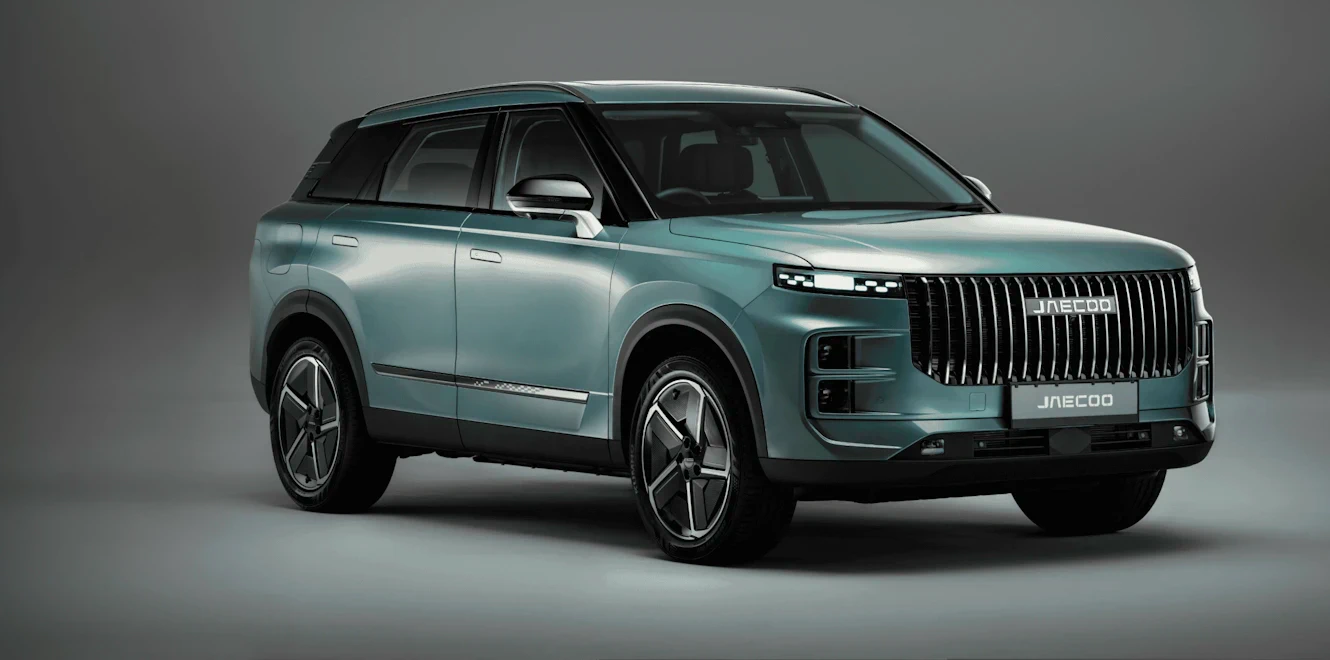
Jaecoo 7 SHS
The JAECOO 7 makes its best case as a well-equipped family SUV for buyers who can charge regularly. In our JAECOO 7 review for UK buyers, that also means weighing value against polish, because independent reviews suggest it is not as settled to drive as some mainstream rivals.
56 miles: Claimed EV range
40kW: JAECOO 7 charging speed
412 litres: JAECOO 7 boot capacity
Expert Opinion: If you can charge at home or work and you want a left-field SUV with a premium look, the JAECOO 7 is easier to recommend. It suits buyers who place value and specification high on the list, but it is less convincing if you expect class-leading ride control or a screen that feels instant every time you tap it.
What the JAECOO 7 review says about the UK car and how it drives on petrol vs PHEV
The JAECOO 7 is a mid-size SUV aimed at buyers who want a lot of visual presence and a rich standard specification. In the UK, the plug-in hybrid version uses a 1.5-litre turbocharged petrol engine with an electric motor, delivering 201bhp. That is the version to look at if you can charge regularly and want to cut short-trip petrol use.
There is also a clear split in how to think about it. The SHS plug-in hybrid is the version with the quoted electric-only range, while the petrol model is the simpler choice if you do not want to rely on charging. Independent leasing reviewers also note that the SHS is only available with front-wheel drive, so it is not the version to pick for off-road use.
If you do mostly urban commuting, a home charger or regular workplace charging makes the plug-in version easier to use as intended. If you rarely plug in, the plug-in hybrid still works, but you carry the extra battery weight without getting the full benefit.
A simple way to split them is this: choose the petrol car if you want less to think about, and choose the SHS if you can charge and want to use electric driving properly. See the car in person if you want to judge the seating position and cabin layout before deciding.
What this JAECOO 7 review found on comfort and control in real-world UK driving
Opinions on the driving experience are more mixed here. Autocar's 6,000-mile long-term test said the ride and secondary control were disappointing, with the car pitching and rolling over larger bumps and feeling choppy over smaller ones. It also noted a fair amount of suspension and road noise when the car was fully loaded.
That does not make the JAECOO 7 unusable. It means the chassis feels less settled than the exterior suggests, especially on poorer roads or with passengers and luggage onboard. On a typical British B-road, that can matter more than a long equipment list.
Other automotive testers add another point: the front wheels can lose grip, especially in the wet, which brings wheelspin and traction loss into the picture. That is useful context if you expect the car to feel calm on greasy roundabouts and sharper junctions.
If you want a comfortable SUV for mainly calm commuting, the JAECOO 7 can do the job. If you are sensitive to body movement, road noise or traction feel, it is worth trying on your usual roads, not just around town.
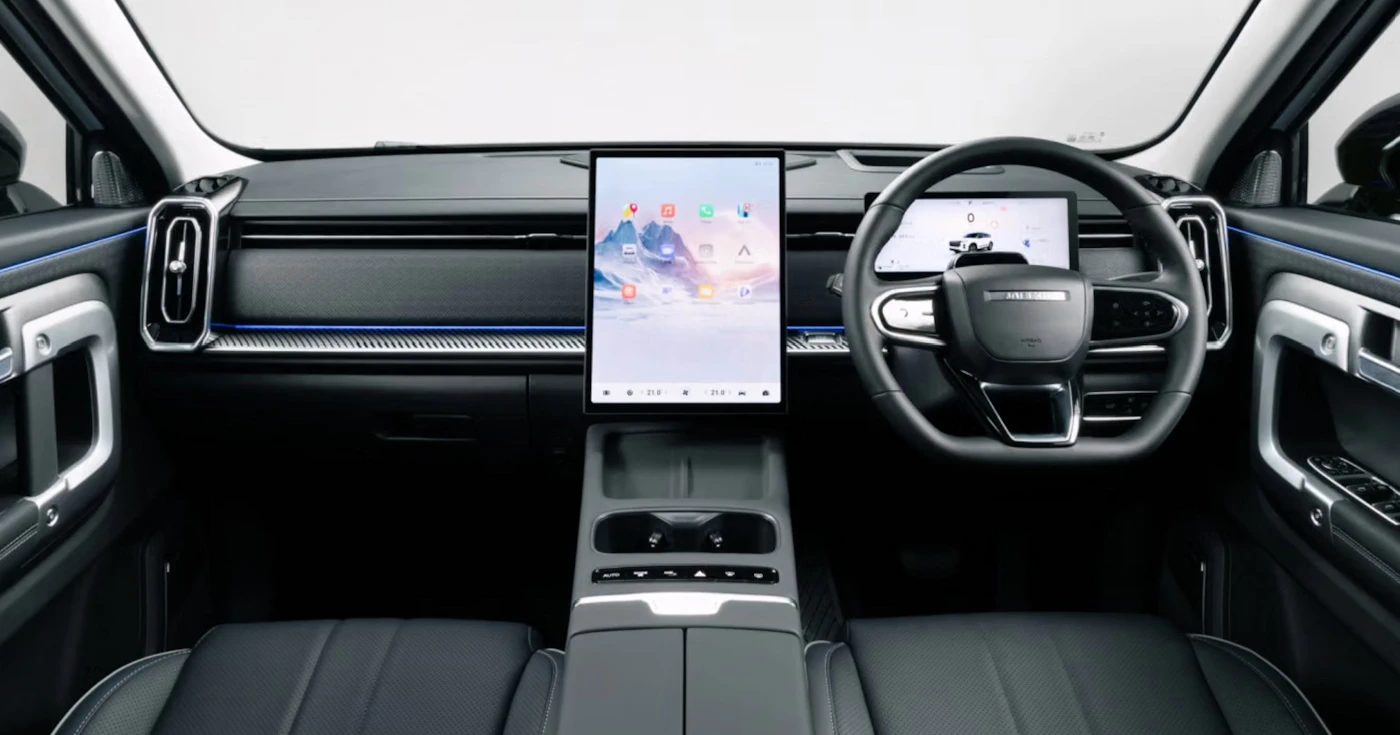
Jaecoo 7 SHS Interior
What the JAECOO 7's interior and tech are like day-to-day
The cabin makes a strong first impression. The 14.8-inch central touchscreen is large and bright, but Chasing Cars found the graphics anonymous and the interaction laggy. That is the sort of thing you notice quickly if you use navigation, media and climate functions often.
In day-to-day use, the JAECOO 7 suits a simpler routine better. If you mostly set the car up once and drive, the screen may not bother you much. If you like quick responses and physical controls for common tasks, it can feel less natural than the rest of the cabin suggests.
There are workarounds, but they are not the same as having a more intuitive interface. It helps to spend a few minutes with the system while stationary, then check how easy it is to make common changes without looking away from the road for long. That is the sort of thing a test drive should reveal.
How big is the JAECOO 7 boot capacity and what storage feels practical for families
The plug-in hybrid boot is quoted at 412 litres, which is usable but not especially generous for a car of this size. Other reviewers describe it as slightly smaller than some rivals, and that is the main point: it is practical, but you should check whether the shape suits your own kit.
For family use, the size figure is only part of the story. A pram, school bags or a weekly shop may fit fine, but the boot lip height and the way items stack matter just as much as litres on a page. If you carry bulky pushchairs or a lot of soft luggage, those details are worth checking in person.
The petrol version is reported elsewhere with a different boot figure, so the cargo space varies by variant. That means you should not assume the plug-in hybrid and petrol cars are identical in everyday practicality.
It is worth checking the boot lip height, whether a pram fits without awkward lifting, and how much usable space remains with the rear seats in place.
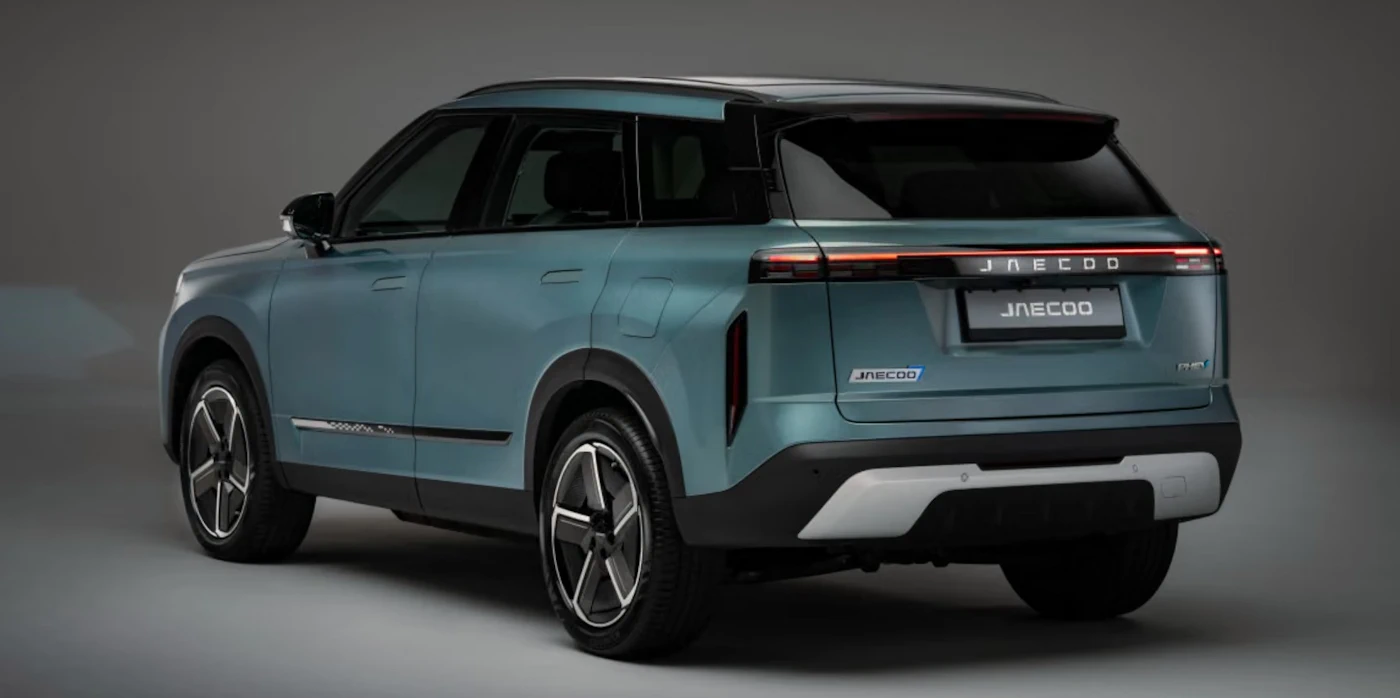
Jaecoo 7 SHS Rear View
Can you trust the JAECOO 7 PHEV range, JAECOO 7 charging speed 40kW and running costs in the UK
The quoted electric range is around 56 miles, and that is the figure most buyers will judge against a normal commute. Under suitable conditions, the plug-in hybrid can DC fast-charge at up to 40kW, with 30–80% taking about 40 minutes according to independent road tests. That gives you a workable routine if you have access to a charger while shopping or at work.
In practice, the simplest approach is this. If you can plug in daily, the JAECOO 7 SHS is the version that makes the most sense. If you can only charge occasionally, the petrol car may be the less complicated ownership choice.
One-month reporting from an independent leasing review suggested strong economy when the car was kept charged, with around 180mpg on mixed routes. Treat that as a real-world snapshot rather than a promise, because plug-in hybrid running costs change quickly if charging becomes infrequent.
The JAECOO 7 plug-in hybrid pays back best when you use the battery regularly. If you do not, the savings narrow fast.
Is the JAECOO 7 good value compared with rivals in the UK
This is the part that explains its appeal. Autocar said few cars you can lease for less than £300 a month, or buy new for not much over £30,000, offer as much style or space. That helps explain why the JAECOO 7 has gained attention.
The catch is that value is not just about entry price. You also need to think about whether you can charge, whether the ride quality matters to you, and whether you are happy with the touchscreen behaviour. Other automotive reviews list the SHS starting price at £35,065, which shows how quickly the plug-in hybrid version moves away from the lower headline territory.
So the JAECOO 7 feels best value when you want a lot of equipment and style for the money and you can work with its compromises. It is less convincing if your priorities lean towards ride finesse and crisp controls.
If you want the look, the space and the plug-in savings, the JAECOO 7 deserves a proper test drive. Compare the latest specification and offers with the Invicta Motors team before you decide.
Should the JAECOO 7 review put it on your shortlist
Start with this JAECOO 7 review if you can charge regularly and want a family SUV with a strong equipment list. Be cautious if you are sensitive to ride movement, wet-road traction or screen response. Then test it on your own roads, with your usual passengers and load, before you sign.
Frequently Asked Questions
What are the common Jaecoo J7 problems? The most common Jaecoo J7 problems reported in independent reviews relate to ride control on uneven surfaces, front-wheel traction in wet conditions, and occasional touchscreen lag. Top Gear also notes that the power delivery can feel a little haphazard at times, so it is worth testing the car on rough roads and in stop-start traffic.
Is Jaecoo better than BYD? There is no simple answer to that. Compare warranty, charging access, ride comfort and running costs against the specific BYD model you are considering, rather than trying to rank the brands as a whole.
Are Jaecoo cars reliable? Long-term reliability needs time and owner data, so it is too early to make a firm judgement here. Check owner feedback, warranty terms and servicing support before you decide.
Are Jaecoo cars expensive to insure? Insurance depends on your postcode, driving history, age, trim and powertrain, so you will need quotes for your own profile. The plug-in hybrid and petrol versions may be priced differently by insurers.
How should I test-drive the JAECOO 7 to know if it will suit my family? Take your usual passengers, try the screen while the car is moving slowly, and drive on rougher roads if you can. Also check boot access with your normal luggage, because practicality is about shape as much as litres.
Sources
Autocar, https://www.autocar.co.uk/car-review/jaecoo/7/long-term-reviews/6000-miles-jaecoo-7-does-it-deserve-be-uks-bestseller (checked 30 October 2026)
Driven Car Guide, https://www.drivencarguide.co.nz/reviews/jaecoo-j7-super-hybrid-system-phev-quick-review-extended-range-rover/ (checked 30 October 2026)
Chasing Cars, https://www.chasingcars.com.au/reviews/midsize-suvs/jaecoo-j7-summit-shs-plug-in-hybrid-review/ (checked 30 October 2026)
Top Gear, https://www.topgear.com/car-reviews/jaecoo/7/driving (checked 30 October 2026)
Prices, range, charging and equipment can change. WLTP and manufacturer figures are for comparison only, and real-world results will vary with conditions and use. Confirm the latest specification before you buy.