












Japanese craftsmanship shaped into motion
Why Mazda Kodo Design Continues to Turn Heads
Kodo—Soul of Motion—is Mazda’s approach to creating cars that feel balanced, alive and emotionally engaging before the engine or electric motor has even started.
The philosophy has evolved since 2010 and now shapes everything from the Mazda3 and all-new CX-5 to the award-winning electric Mazda6e.[1]
The quick answer
What Is Mazda Kodo Design?
Kodo means “Soul of Motion”. Introduced in 2010, it is Mazda’s design philosophy for creating forms that appear balanced, alive and full of energy even when the vehicle is standing still.[3]
Kodo is not a fixed collection of grilles, lights or decorative lines. It is an approach to proportion, surface and emotion. Mazda begins with the feeling a vehicle should create, then uses hand-shaped clay, light and colour to refine that idea into a production design.[1]
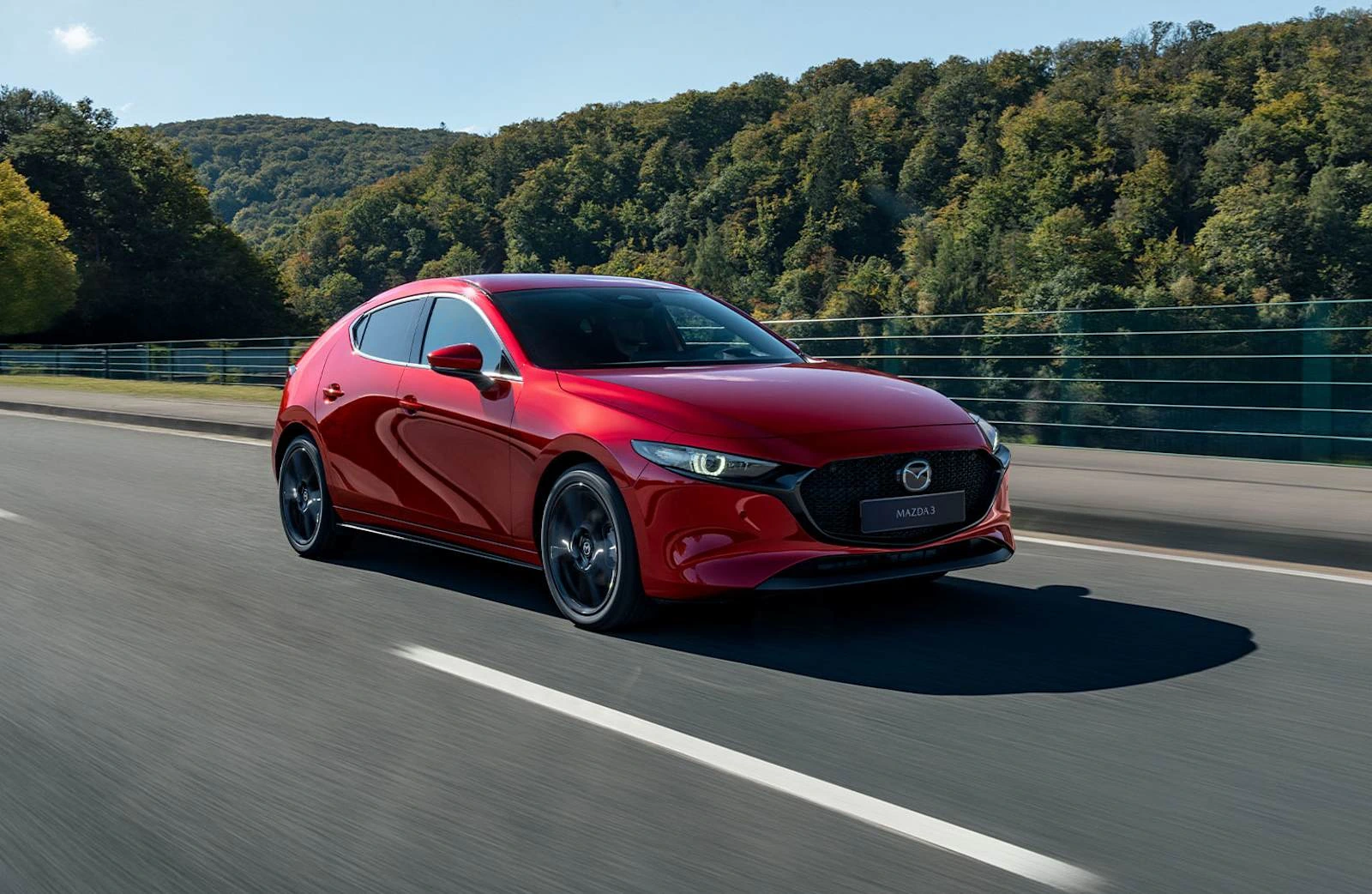
The result is a recognisable family appearance without making every model identical. A Mazda3 can feel compact and athletic, a CX-80 calm and substantial, and a Mazda6e sleek and progressive while each still belongs to the same design language.
Beauty through restraint
Rather than adding a crease or trim piece wherever space allows, modern Kodo design often removes visual clutter so proportion, reflection and material quality can do more of the work.

The current design language
Ma, Komorebi and Kaicho
Mazda’s current UK design presentation explains Kodo through three Japanese ideas that shape both exterior and interior design.[1]
Ma
The beauty of empty space. Removing unnecessary detail gives important shapes, controls and materials room to have greater impact.
Komorebi
The interplay of light and shadow. Carefully developed surfaces change character as reflections move across the bodywork.
Kaicho
Harmony. Colours, textures and materials are curated so the complete cabin or exterior feels coherent rather than assembled from separate parts.
Craft before production
Why Mazda Still Shapes Cars in Clay
Digital modelling is essential, but Mazda continues to use full-size clay because a skilled modeller can read subtle changes in surface tension and reflection in a way that is difficult to judge on a screen alone.
Hundreds of hours may be spent refining the transition between light and shadow. That work is especially visible on vehicles such as Mazda3, where large, clean side surfaces act almost like a moving canvas.[2]
This Takumi approach is not nostalgia. It is a practical method for protecting the original emotional idea as the design moves from sketch to engineering and production.
Colour as part of the form
Why Soul Red Crystal Looks Different
Mazda treats colour as part of the vehicle’s shape rather than a finish added at the end. Takuminuri paint technology is developed to reproduce the depth and contrast first achieved by specialist painters and designers.[4]
Light and Shadow
Soul Red Crystal combines bright highlights with deep shadow, helping the body’s curves appear more pronounced as the viewing angle changes.
Production Craft
The challenge is to reproduce a hand-developed colour consistently in mass production while retaining clarity, saturation and depth.
Kodo in the 2026 UK range
A Philosophy That Keeps Moving
The design language remains recognisable, but new models use it to express different priorities.

All-New CX-5
Balanced proportions, a confident front and a distinctive rear bring Kodo into a more spacious, technology-rich family SUV.[6]
Mazda6e
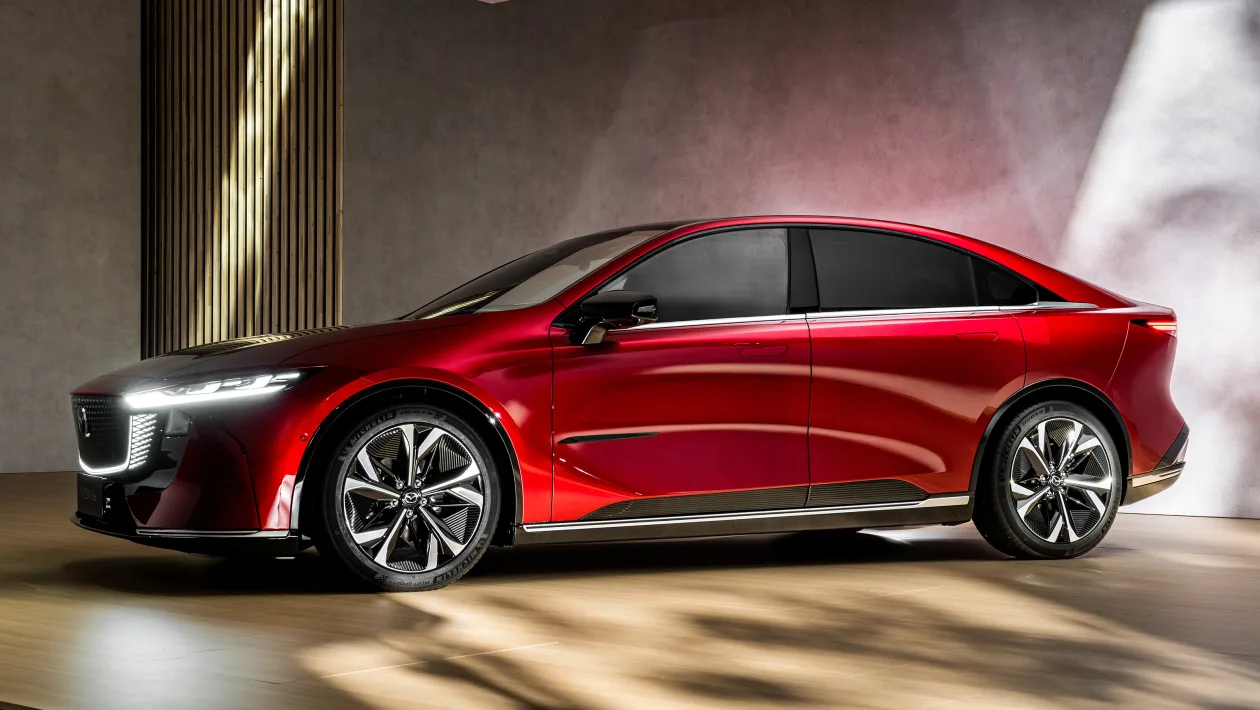
Flush handles, a low roofline, smooth surfaces and an electric spoiler reinterpret Kodo for an electric fastback that won 2026 World Car Design of the Year.[5]
CX-60 and CX-80
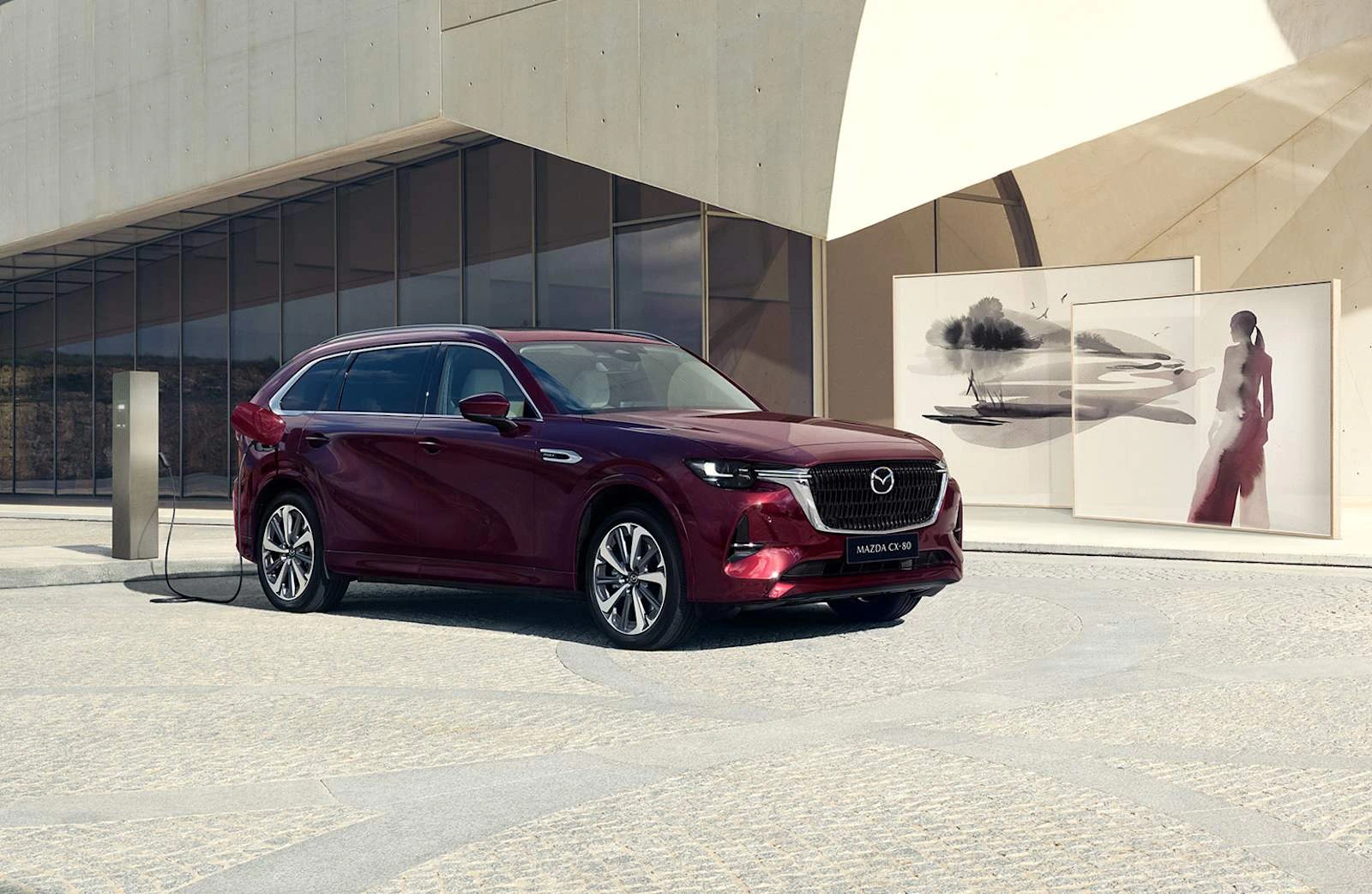
Long bonnets, rearward cabins and restrained detailing create strength without relying on excessive visual aggression.
More than exterior styling
Calm, Purposeful Interiors
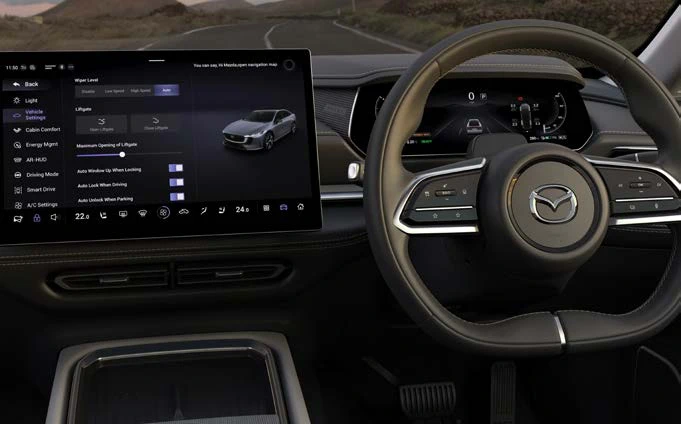
Kodo also influences how a Mazda cabin feels. Horizontal forms, deliberate spacing and carefully selected materials help create a calmer environment, while key information remains easy to find.
Current models express this differently. Mazda3 uses a restrained driver-focused layout, while Mazda6e integrates a much larger digital interface into a cabin Mazda describes through Ma—the beauty of empty space.[5]
The screen size may change, but the objective remains consistent: technology and materials should support the overall experience rather than look like unrelated additions.
Frequently asked questions
Mazda Kodo Design Questions Answered
Key facts about Kodo, Japanese craftsmanship, colour and its evolution across the current Mazda range.
What does Kodo mean?
Mazda translates Kodo as “Soul of Motion”. It is the brand’s design philosophy for giving a stationary object a sense of energy, balance and life.
When was Kodo design introduced?
Mazda introduced Kodo in 2010 with the Shinari concept car. It has continued to evolve across subsequent production and concept models.
What are the main principles of current Kodo design?
Mazda’s current UK design page highlights Ma, the beauty of empty space; Komorebi, the interplay of light and shadow; and Kaicho, harmony created through materials and space.
Why does Mazda still use clay modelling?
Mazda’s master modellers shape full-size clay models by hand so designers can judge proportion, surface tension and the way light moves across the body before production.
What is Takuminuri paint technology?
Takuminuri combines handcrafted colour development with precise production techniques to create finishes with greater depth and contrast, including Soul Red Crystal.
How has Kodo changed for electric cars?
The Mazda6e uses smoother surfaces, flush handles and coupé-inspired proportions while retaining the balance and play of light associated with Kodo.
Has Mazda won design awards for Kodo?
Yes. Mazda states that the Mazda6e was named 2026 World Car Design of the Year, following several earlier design awards across the range.
References
Sources and Further Reading
The article has been checked against current official Mazda UK information and relevant independent safety material.
- 1
- 2Mazda’s Kodo design philosophyMazda UK
- 3Kodo Design turns 10Mazda UK
- 4
- 5The all-new Mazda6eMazda UK
- 6All-new Mazda CX-5 designMazda UK
- 7Mazda3 Hatchback designMazda UK
Experience Mazda for yourself
See Kodo Design in Person
Explore the latest Mazda range at Invicta Motors and see how proportion, colour and craftsmanship change with the light.